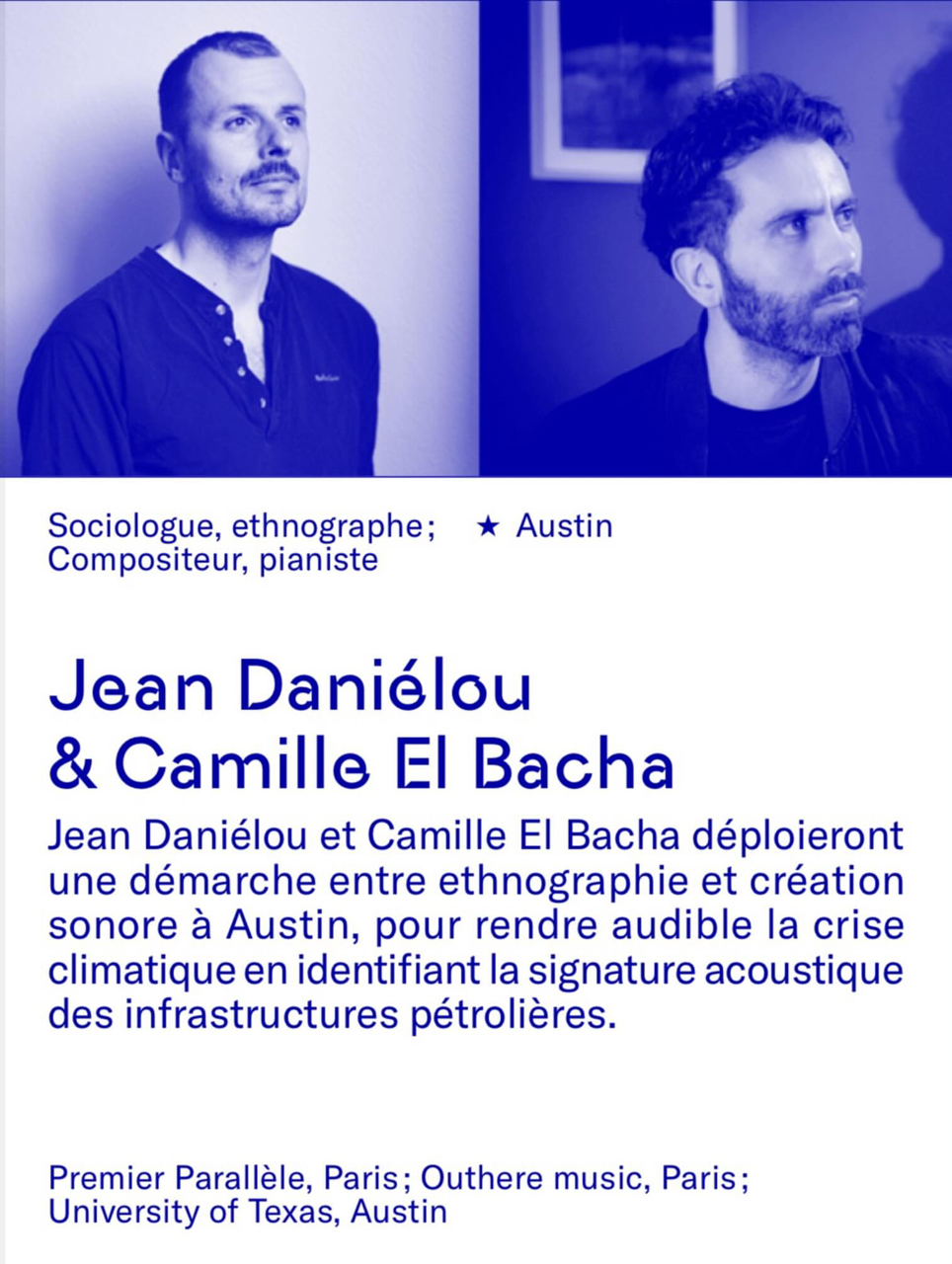
So far, the project name has been “Ordinarycrisis : A petroleum soundscape”. Its origin lies in the encounter between us,musician Camille El Bacha and ethnographer Jean Daniélou. We were both exploringhow to overcome the limits of our own disciplines to better catch the sensitivenature of the climate crisis.
As a musician, Camille was lookingfor a sonic material he could use to elaborate a sound of our contemporarycondition. His idea was to break the apparent symbolic abstraction of music anddevelop a down-to-earth approach, using sounds of everyday situations to craft adocumentary echo of the human activities provoking global warming. As anethnographer, Jean was looking for a manner to go beyond scientificdemonstration and written statements to express the damages caused by fossilinfrastructures on environment and people.
In our discussions, sound appearedto be, firstly, a suitable material able to capture fragments of reality, and,secondly, an instrument to explore and approach differently our understandingof technical systems like fossil infrastructures. Pursuing this intuition, wecame up with the following questions: What kind of sound does an oil fieldproduce? and, conversely, what does this sound tells us about theinfrastructure? Inquiring the acoustic dimension of infrastructures appeared tobe a blind spot in the common representations of these large technical systems.If iconic images of oil platforms exist, we lack an auditive grasp onthem.
Once this statement became clear, we havedecided to start a collaboration based upon a joint inquiry mixing ethnographicfield study and sound analysis. In practice, the idea is to “listen to”infrastructures by recording with microphones the environment where they areinstalled. Collecting sounds on the field with a recording device whilecirculating around these installations first serve a basic intention that aims atproducing a documentary account of their acoustic existence.